
"there are grades"
20000 article(s) found

Full of soft Yega Xuefei Aduo boutique coffee beans planting geographical location, climate, altitude is simple.
4. The grading system of grade Ethiopian coffee is not based on the number of items, but on the proportion of defective beans in raw beans. In October 2009, Ethiopia launched the ECX boutique coffee trading grading system. Q-Grader rated raw beans as follows: washed Yega Xuefei was divided into Grade 1 and Grade 2, and Solar Yega Xuefei was classified as G
What is the grading fnc system for Colombian coffee A brief introduction to Colombian supremo coffee beans
Professional coffee knowledge exchange more coffee bean information please follow Coffee Workshop (Wechat official account cafe_style) Front Street-Colombia FNC grading system introduction to the Colombian Coffee producers Association / FNC/ all of these marketing programs are initiated by the Colombian Coffee producers Association (FNC). The association was founded in 1927, which is equivalent to the coffee industry.

Is there a G1 for washed Yejaschuffe? is it expensive for pure Yejaschuffe? is it expensive?
Professional coffee knowledge exchange more coffee bean information Please pay attention to the coffee workshop (Wechat official account cafe_style) coffee beans in Indonesia and Africa are classified according to the proportion of defective beans. Indonesian beans are mainly divided into six grades, namely G1~G6. The highest grades of washed beans are G1 and G2, and those of sun-dried beans are G1 and G3. What does that mean? As follows: washing: Grade-1;Grad
What does the classification of Ethiopian coffee mean by washing and tanning G1?
Ethiopian coffee beans are divided into five levels. The first and second stages are washed beans. Washed beans Grade1 represents 3 defective beans per 300g raw beans, and Grade2 represents 4 defective beans per 300g. Gradc1 grade water washed beans are very rare and are generally difficult to buy. At present, all the washed beans exported from Ethiopia are Grade2 grade. The quality of sun-dried beans is Grade3 and Grade4 in order.

What does Kenya Coffee Bean Grade ABtop mean? introduction to the characteristics of graded brands
What does the Kenyan coffee bean grade ABtop mean? graded brand characteristics introduce different small producing areas mean different flavor characteristics. For example, the famous Ethiopia-Haramoka (EthiopiaHarrar) is produced in southern Ethiopia near Somalia. Haramoka has wine-like aromas, blueberry or grape flavors, thick palate, fresh and bright Yega Snow, with citrus.

How about Brazilian coffee? how Brazilian coffee beans are graded? the good and the bad are mixed in a variety of ways.
Professional coffee knowledge exchange more coffee bean information please follow the coffee workshop (Wechat official account cafe_style) front street-Brazilian coffee grading system some novices who are new to boutique coffee will ask: what is the meaning of Kenya AA, what is the difference between Yega Xuefei G1 and G2? Today, let's take a serious look at the packaging of coffee beans and figure out what they represent. When coffee

On the grading of raw coffee beans
The last step in the processing of raw coffee beans is grading, so what are the grading methods of raw coffee beans? Do different countries adopt the same approach? At present, there are three main rating criteria for raw coffee beans, and different countries adopt different rating methods according to their own production conditions and national conditions (not all coffee producing countries adopt the same method).

How Ethiopian coffee is graded why Ethiopian coffee beans vary in size
Professional coffee knowledge exchange more coffee bean information please follow the coffee workshop (Wechat official account cafe_style) Ethiopia is the hometown of Arabica coffee, it is in Ethiopia's Kaffa region of the forest, you can see wild Arabica coffee. In Ethiopian, coffee is called Bun or Buna, coffee beans (coffeebean

Introduction of Kenya AA coffee beans, introduction of Kenya coffee beans
Following Cafe Review (Wechat official account vdailycom) found that Beautiful Cafe opened its own small shop with a wide variety of coffee, each with different grades, and there were many different choices for a cup of coffee. Among them, beans from the same producing area are divided into several grades, and consumers who do not have a clear understanding of this will look a little dizzy, so the editor collected some customs this time.

The producing area of Yega Chuefei Adoto, the grade of Yega Chefe Coffee.
Following Kaipai (Wechat official account vdailycom) found that the Beautiful Cafe opened a small shop of its own, a by-product area of Ethiopia's Sidamo region (Sidamo), which is independent because of its special flavor. In addition to the small town of Yega Xuefei, it also includes three by-product areas such as Wenago, Kochere and Gelena/Abaya around it. 1. Planting system and Environment Yega

There are several grades of Ethiopian coffee.
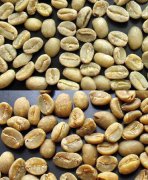
Ethiopian beans are easily recognizable, mostly small and pointed long beans, known as longberry, and often mixed with small oval-shaped short beans, called shortberry, which look uneven in size and appearance. The commercial bulk beans of Grade4 or Grade5 are mostly mixed with hundreds of different crystal seeds in different producing areas, so the phenomenon of uneven bean phase is the most obvious.

There are several coffee farms in Ethiopia's coffee-producing countries
Grade of Ethiopian coffee: Ethiopian washed coffee Yega Chuefei G1 G2 Sidamo (Yirgacheffe, Sidamo) has the highest grades 2 and 3 (G2, G3), while sun-processed coffee in eastern Ethiopia is mostly grade 4 or 5 (G4, G5). In many cases, level 4 coffee is marked as level 5 in order to reduce taxes. At present, the classification is not uniform and there are

The entrance of Ethiopian coffee is full of floral, fruity, sour and sweet aromas.
Even the official research unit of Ethiopia does not know how many Arabica subspecies there are in Ethiopia. The coffee cooperatives in this mountain are certainly different from those planted in another mountain, and even small farmers in the same region grow different varieties of coffee. It has been estimated that there are at least 2000 varieties of Ethiopian coffee and even more than 4500 kinds of coffee. Compared to the southern neighbor Ken
The ranking system of raw beans in coffee producing countries introduces what is the best grade of coffee beans.
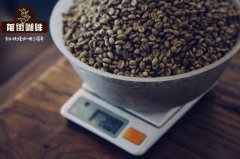
Ethiopia (rated in proportion to defective beans) before the emergence of the Ethiopian Commodity Exchange (Ethiopia Commodity Exchange referred to as ECX), Ethiopia's coffee export grade was established by the CLU Department (Cupping and Liquoring Unit) under the Ministry of Agriculture, mainly according to the number of defective beans in 300g. The classification criteria are as follows.
There are two methods for grading raw coffee beans in terms of sieve size, size
There are two ways to classify raw coffee beans, one is the filter number, and the other is the elevation. It is divided by the filter number, and the size is size in terms of the screen size. Round beans are generally smaller than flat beans, between 8-13 and 12-29. 8, 9, 10. 12, 13. 18. 29 = small, medium, ordinary. Quasi-big. Big, extra large. The bigger the size, the bigger the beans. Like SC-.
Brazilian coffee bean producing area, Brazilian coffee bean grade
Following Cafe Review (official Wechat account vdailycom) found that Brazilian Coffee, which opened a small shop in Fairview Cafe, had a low sour taste, matched with the sweet and bitter taste of coffee, and had a slight grassy aroma, with a slightly bitter taste in the fragrance, smooth taste and pleasant aftertaste. There are no outstanding advantages for Brazilian coffee.

Grading of raw coffee beans
At present, there are three main rating criteria for raw coffee beans, and different countries adopt different rating methods according to their own production conditions and national conditions (not all coffee producing countries adopt the same method). Let's introduce these three popular rating methods. One: the reason for the emergence of such a classification standard according to the altitude of the coffee producing area is mainly because of the high level.

Elegant fruit wine Yega Chuefei Adoto boutique coffee bean flavor, taste and aroma description, Jane
Yirga cheffe is a small town in Ethiopia, 1700-2100 meters above sea level. It is also synonymous with Ethiopian boutique coffee. Since ancient times, this is a wetland, the ancient saying Yega yirga means to settle down, and cheffe means wetland, so Yega Xuefei means to let us settle down in this wetland. Strictly speaking, Yega Sheffield is Esseobi.

Introduction to the characteristics of coffee flavor and taste of Ethiopian coffee manor with long, pointed beans
The highest grades of Ethiopian washed coffee Yega Chuefei G1 G2 Sidamo (Yirgacheffe, Sidamo) are Grade 2 and Grade 3 (G2, G3), while most of the sun-processed coffee in eastern Ethiopia are Grade 4 or Grade 5 (G4, G5). In many cases, level 4 coffee is marked as level 5 in order to reduce taxes. At present, the grading is not uniform and messy, because there is also sun processing.
Coffee quality grading-- coffee bean grading high-grade coffee how to distinguish coffee bean quality
There is no internationally accepted standard for coffee quality grading, and the grading method varies from country to country. Therefore, coffee classification is based on some of the characteristics applicable to each producing country. The sample of coffee beans taken from a bag is judged according to the standards of the producing country, the samples are rated, and most of the coffee is good or bad according to the evaluation.